Drilling guide
A clean hole in concrete, in five steps.
What a shop assistant would tell you across the counter: which bit, which size, and how to drill into an HDB or condominium wall.
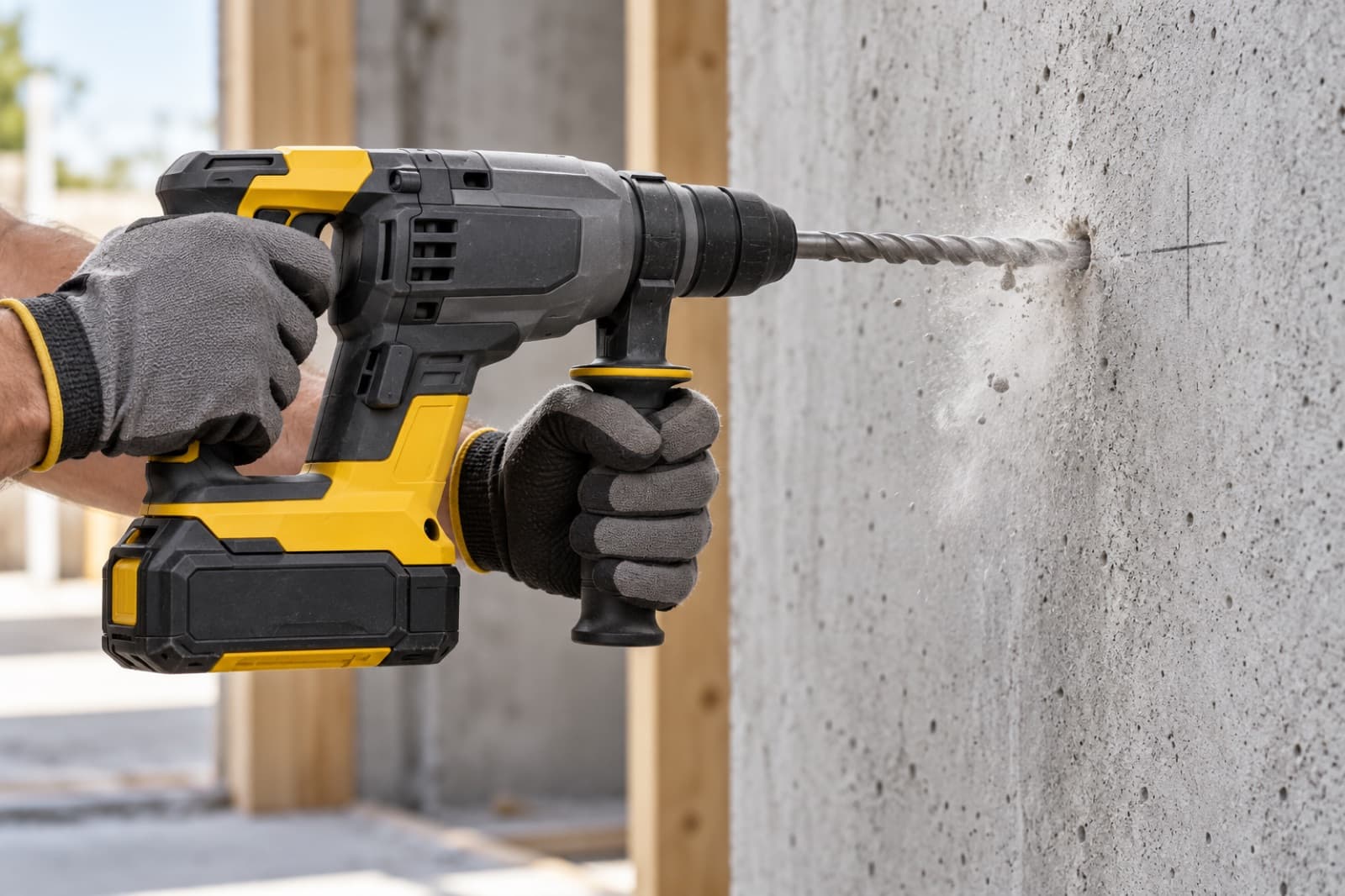
- 01Check the wallLook for hidden pipes and cables. Do not drill directly above or below a switch or a socket, where cables usually run.
- 02Mark it, glasses onMark the hole and wear safety glasses: masonry drilling throws grit.
- 03Right bit, right sizeA masonry bit of the size the fixing asks for, with the hammer mode on.
- 04Drill straightPull the bit out now and then to clear the dust. Go about 10 mm deeper than the fixing is long.
- 05Clear the holeBlow or vacuum the dust out of the hole before putting the fixing in.
Try it
Which bit? The fixing decides.
1. What are you drilling into?
2. What goes in the hole?
The fixing sets the size of the hole, not the screw.
You need
Hammer mode onMasonry bit 10 mm
Tungsten carbide tip, hammer mode on. A wood or metal bit will blunt in seconds.
- Masonry drill bit set5, 6, 7, 8, 10 mm · set of 5In stock$18.90
Which fixing
Match the fixing to the wall.
Solid concrete, heavier itemsM8 sleeve anchors, or 6 x 60 mm concrete screws10 mm, or 5 mm for the screws
Concrete or brick, light items6 mm wall plugs with screws6 mm
Plasterboard partitionsM5 hollow wall anchors10 mm
Tally & Torque does not say how much weight a fixing will hold in your wall: it cannot see the wall. Heavy or overhead fixings are a job for a professional.
Wiring is a licensed electrician’s job.
No guide here, and no steps from the assistant, for distribution boards, breakers, switches, sockets or any fixed wiring. A mistake can kill or start a fire. We sell the non-contact voltage tester ($19.90), and changing a bulb is not wiring work.